Southern LaosTemples and river life
Champasak and Vat Phou: temple ruins on the Mekong
Vat Phou is a UNESCO World Heritage temple site near Champasak. How to visit from Pakse by car, how long to allow, the heat, the stairs and what comes next.
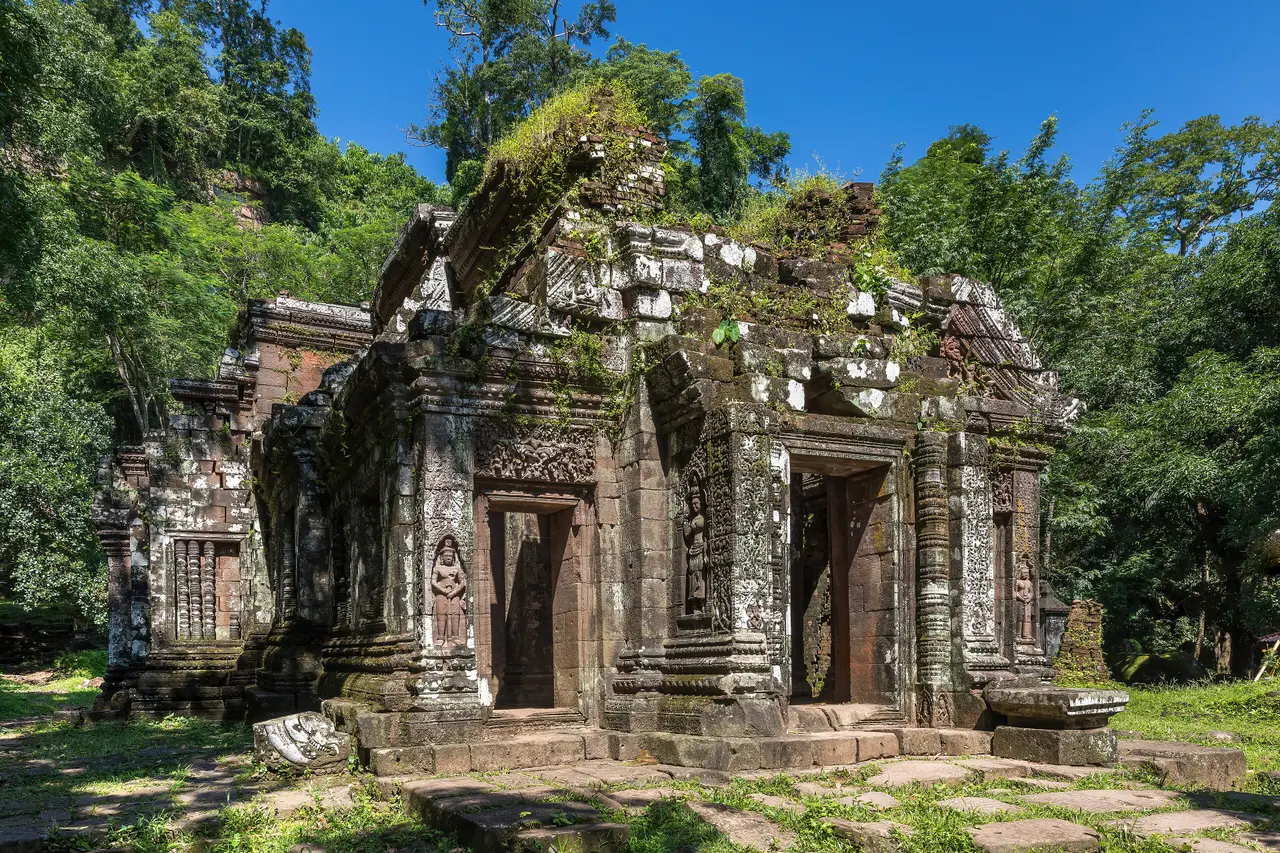
The upper sanctuary of Vat Phou, Champasak
In short
Champasak is a small riverside town about an hour south of Pakse by road, and the base for Vat Phou, the hillside temple complex that UNESCO lists as World Heritage. A car with a driver can do it as a day trip from Pakse, but a night in Champasak lets you reach the ruins early, before the heat.
Champasak and Vat Phou: Easy without a motorbike
Champasak and Vat Phou are easy by car from Pakse, and the town is small enough to walk. Local transport runs, but a driver lets you reach the temple early and continue south the same day.
Who it suits
- History and archaeology
- A quiet riverside night
- Breaking the road between Pakse and the 4,000 Islands
Why Vat Phou is worth the detour
Vat Phou is a ruined temple complex built in the Khmer style on the slopes of a mountain above the Mekong, older than Angkor Wat in its origins and still used for Buddhist worship. UNESCO inscribed it in 2001 as part of the wider Champasak Cultural Landscape, which includes the ancient city sites and the planned layout of temples, water and roads between the mountain and the river.
The visit is a walk uphill through it: a long processional way lined with stone posts, two large ruined halls, then the stone stairs to the sanctuary near a spring at the top, with views back over the plain. It is quieter and more overgrown than the famous Cambodian sites.
Champasak town
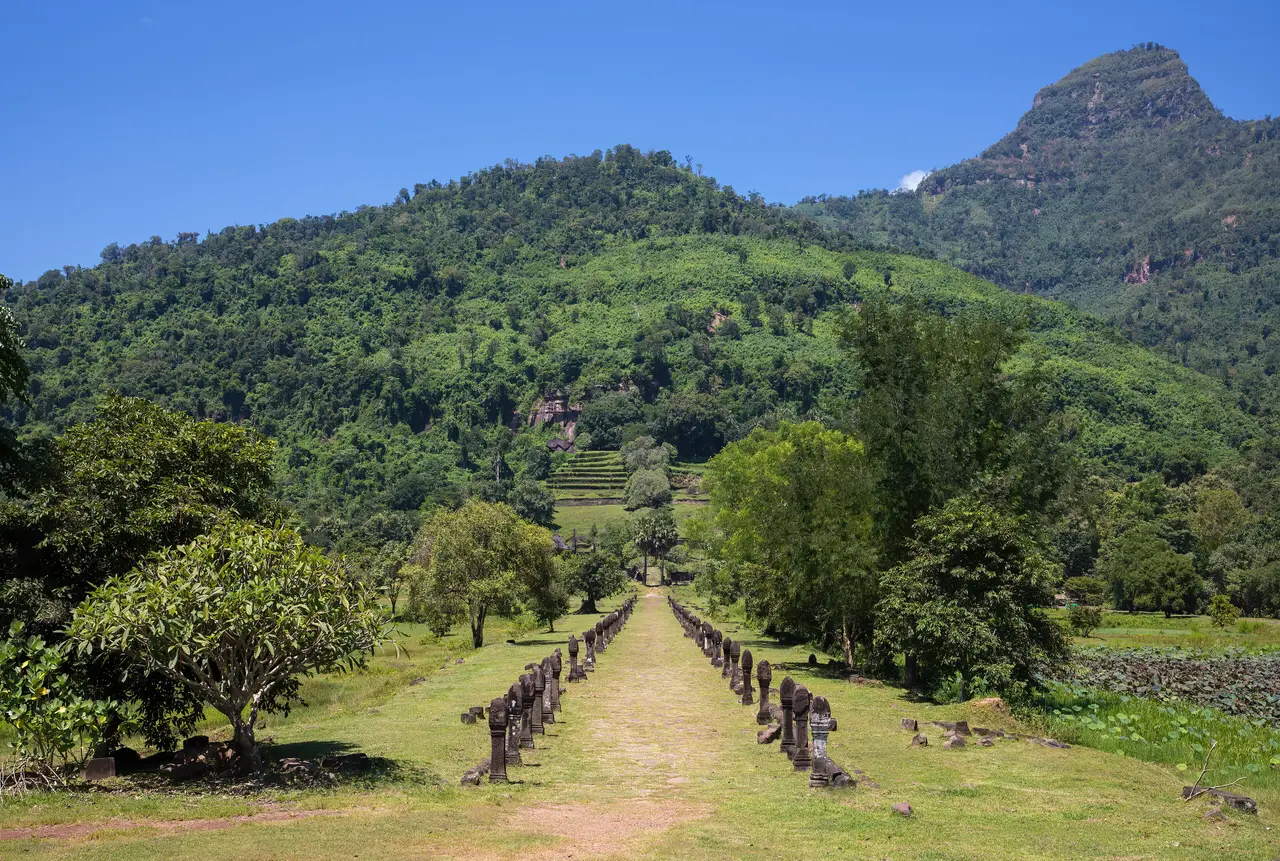
The town is a single long road of wooden and colonial-era houses along the Mekong, with guesthouses, a few restaurants and very little traffic. It is a good place to slow down for an evening. Bicycles are the usual way around for those who want them; everything is also walkable.
Planning the visit
Arrive at the site early. The heat builds quickly from mid-morning in most of the year, and the upper stairs have little shade. An electric cart takes visitors part of the way from the entrance gate towards the ruins. There is an entry fee at the gate; check the current price on arrival. The on-site museum is small and helps explain what you are looking at.
Where to go next
From Champasak, the road continues south to Si Phan Don, the 4,000 Islands, in two and a half to three hours including the boat. Going the other way, the Bolaven Plateau is a day trip from Pakse. Together, Pakse, the plateau, Champasak and the islands make the classic southern Laos route.
Getting to Champasak and Vat Phou and around
Pakse to Champasak
Across the Mekong bridge and south along the west bank.
Champasak to Vat Phou
A few kilometres south of town; an electric cart covers part of the way from the gate.
Champasak to Si Phan Don
Including the short boat from Ban Nakasang to Don Det or Don Khon.
Times are approximate ranges for normal dry-season conditions, including stops. Road works, rain, departure times and how full a vehicle is all change them. A proposal states the plan for your dates.
Questions travelers ask
How hard is the climb at Vat Phou?
The upper sanctuary is reached by steep, worn stone stairs, some shaded by frangipani trees. It takes most people 15 to 30 minutes at a steady pace. Go early in the day, bring water and wear shoes with grip. If stairs are difficult for you, the lower ruins and museum are still worth seeing.
Is it better to stay in Champasak or visit from Pakse?
Staying in Champasak lets you be at the gate when it opens and enjoy a quiet evening by the river. A day trip from Pakse is fine if you have limited time, and many travelers continue to the 4,000 Islands the same afternoon.
When is the temple festival?
A large Buddhist festival, Boun Vat Phou, is held around the full moon of the third lunar month, usually in February. It is lively and busy; accommodation fills up, so plan ahead if your dates overlap.
Sources and checks
Time-sensitive details on this page (fees, journey times, schedules, entry rules) were last checked against the sources below on 11 October 2026. Laos transport changes often, so a written proposal always reconfirms them for your dates.
Tell us where you want to go, not how to get there
Share your dates, the places on your list and how you feel about motorbikes. We reply by email with a realistic route, and when you are ready, a written proposal with transfers, prices, inclusions and who provides each part of the trip.